Comfrey
Symphytum officinale · BoraginaceaeComfrey is a broad-leaved perennial traditionally used, externally, on rough and chapped skin. Its leaves contain allantoin, a compound also present in plantain leaf and widely used in conventional moisturisers. Its genus name, Symphytum, derives from the Greek for "to join" — a reference to how long people have reached for it. It is for unbroken skin only, and it is not taken internally.
How Nurtur Health infuses it
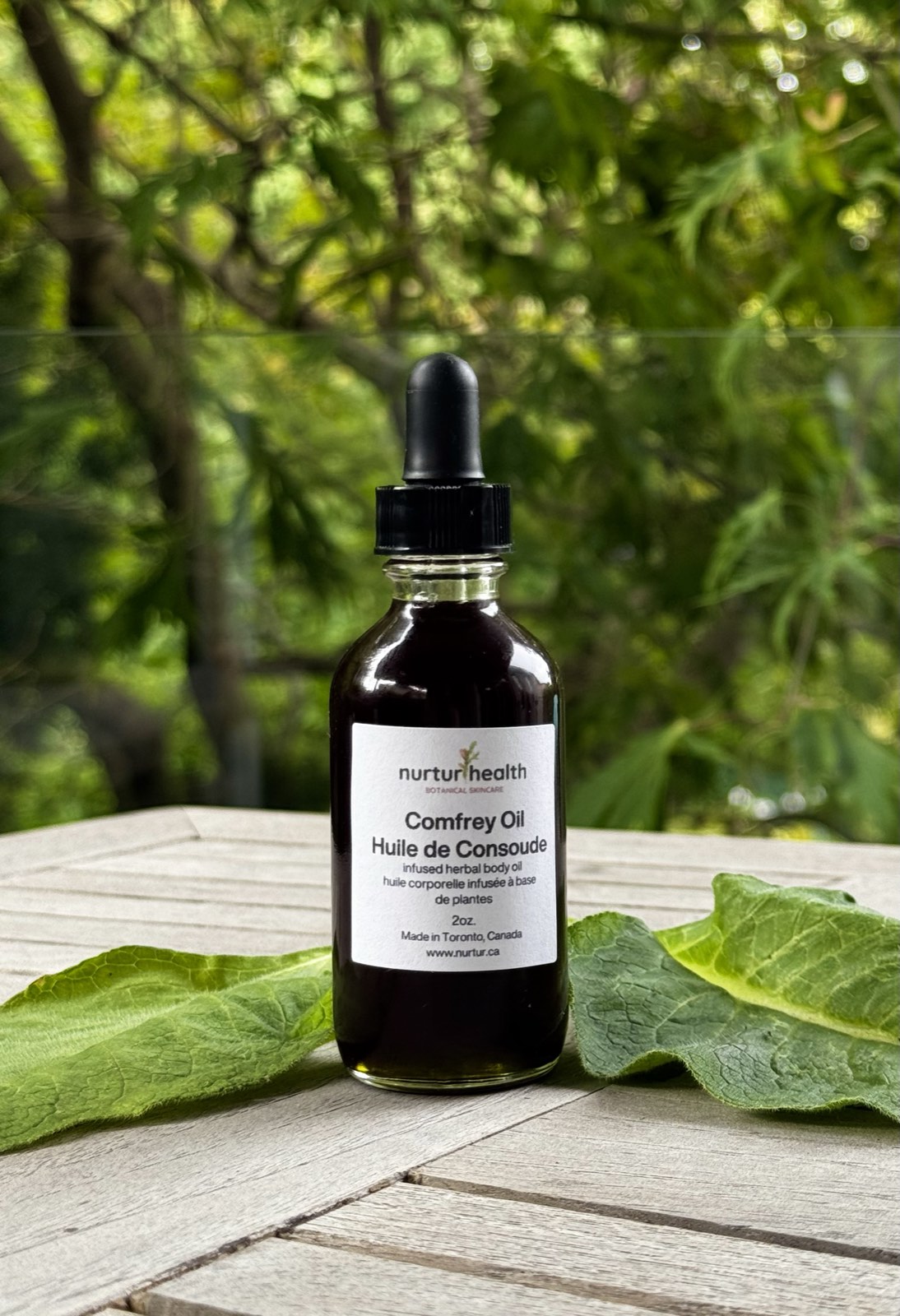
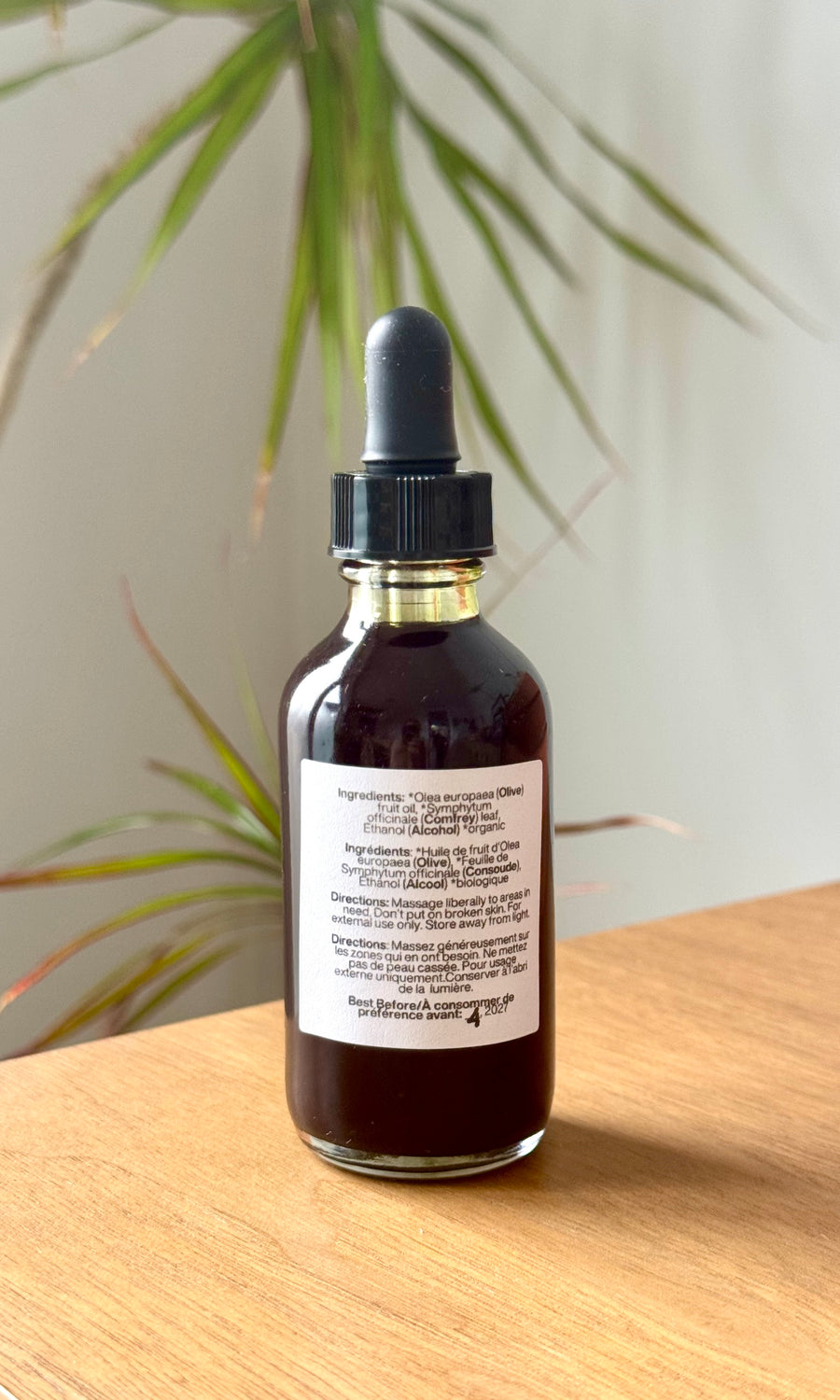
Dried comfrey leaf is macerated in organic olive oil at a ratio of one part leaf to seven parts oil. A small measure of ethanol goes in at the start to sanitise the plant material and prime the cell walls — the alcohol-intermediary method taught by Master Herbalist Kami McBride. The jar rests away from light for six weeks. What comes out is opaque, almost black-green, and shelf-stable in a way a quick warm infusion never is.
Traditional use
In European folk practice comfrey leaf was applied to bruises, sprains and weather-cracked hands — the reason it is sometimes called knitbone. In a modern cosmetic context the honest description is narrower: it is an emollient herb for dry, rough, tight skin, and it belongs in a first-aid drawer next to the plaster tin rather than instead of one.
Comfrey compared