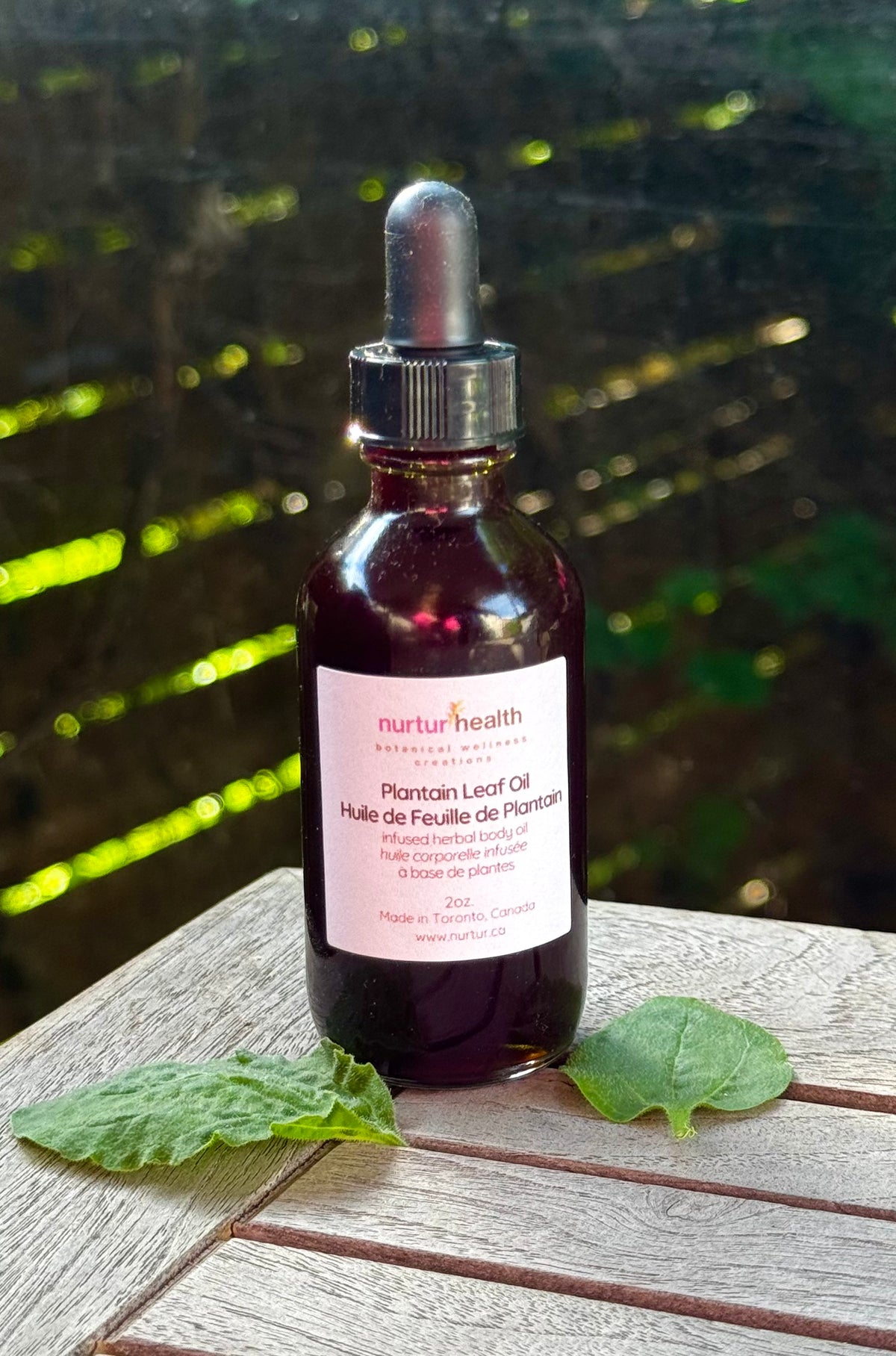
Plantain leaf
Plantago major · PlantaginaceaePlantain is the low, broad-leaved weed that grows in driveways and trodden paths — its genus name, Plantago, comes from the Latin for "sole of the foot," a nod to both the leaf shape and where it likes to grow. Like comfrey, it contains allantoin, but its character on skin is cooler and lighter rather than rich and occlusive. It is for unbroken skin only, and it is not taken internally.
How Nurtur Health infuses it
Dried plantain leaf is macerated in organic olive oil using the same six-week, alcohol-intermediary method as the rest of the range — a small measure of ethanol at the start to sanitise the leaf and open its cell walls, then weeks resting away from light while the oil takes up what the plant will give it. The result is a lighter, greener infusion than comfrey, without the heavy, almost-black colour comfrey's leaf produces.
Traditional use
Plantain has a long folk history as a "first reach" plant — applied fresh and crushed to insect bites, stings and minor scrapes, or dried and infused for longer-term use. Alongside allantoin, its leaves contain aucubin, a glycoside associated with the plant's traditional reputation for calming irritated skin. In a modern cosmetic context, the honest description is an emollient, cooling herb for skin that itches or stings rather than skin that is simply dry.
Plantain compared