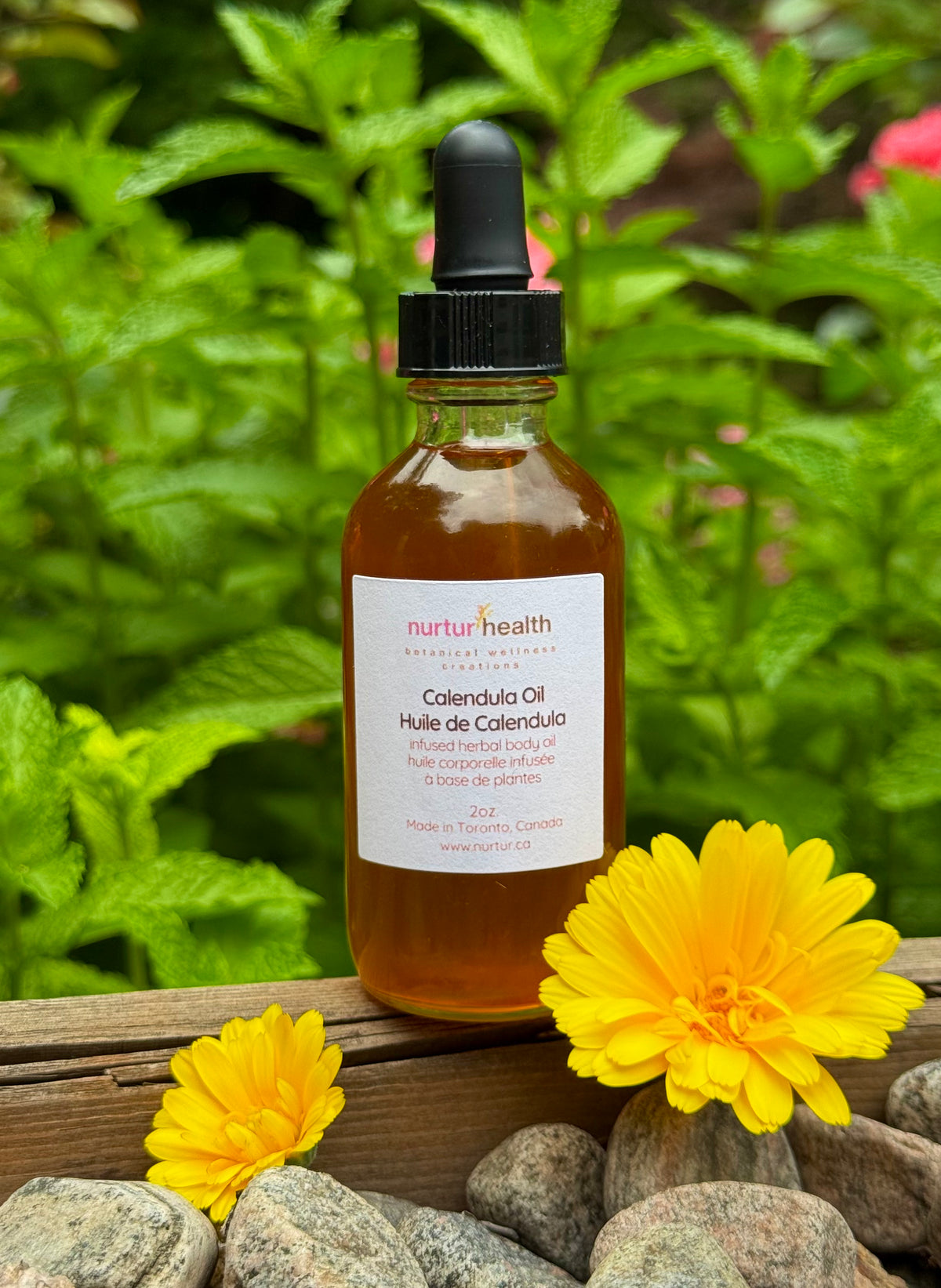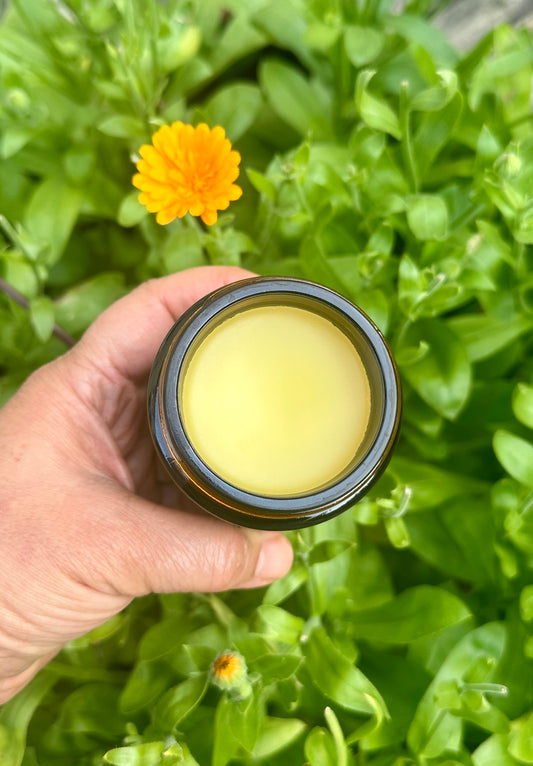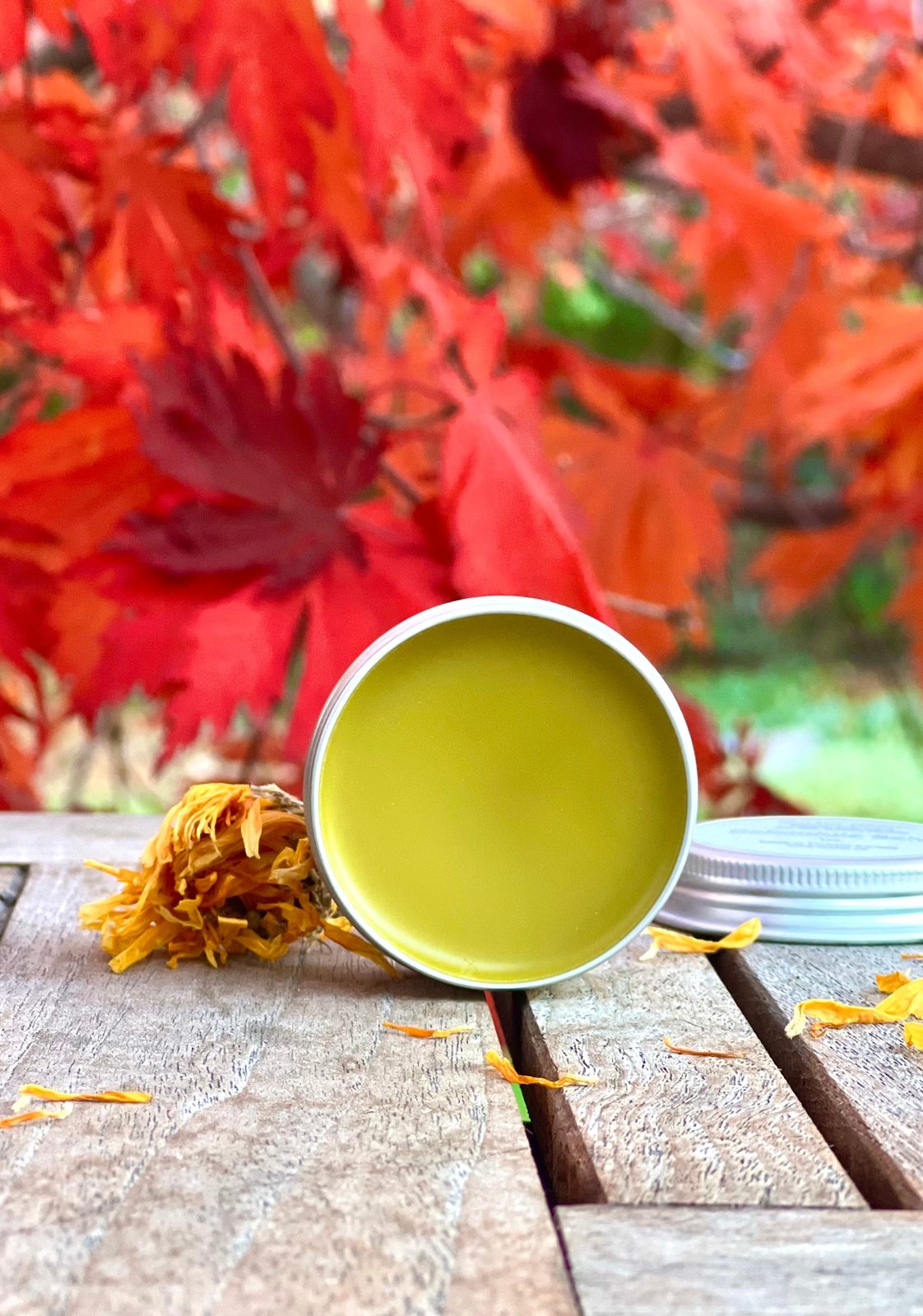
Calendula
Calendula officinalis · AsteraceaeCalendula's genus name comes from the Latin calendae, the first day of the month — a nod to how nearly continuously it flowers. Its species name, officinalis, marks it as one of the plants historically stocked in an apothecary's shop. It is the gentlest plant in this range, a member of the daisy family whose orange petals carry the flavonoids and carotenoids behind its long reputation as a skin-soothing herb. It is for unbroken skin only, and it is not taken internally.
How Nurtur Health infuses it
Dried calendula flowers are macerated for six weeks in your choice of organic olive oil or organic jojoba, using the same alcohol-intermediary method as every other infusion in the range. Jojoba is technically a liquid wax rather than a triglyceride oil, which is why its structure sits closer to skin's own sebum — the reason it is often chosen for the face and for reactive skin, while olive oil is reserved for the body.
Traditional use
Calendula has one of the broadest folk reputations of any skin herb: minor cuts and scrapes, diaper rash, chapped or wind-burned skin, and as a base ingredient in balms meant for babies and the most reactive skin types. Because it is gentle enough for daily use and rarely triggers a reaction, it is often the first plant reached for when introducing a botanical skincare routine, including for children under a practitioner's guidance.
Calendula compared