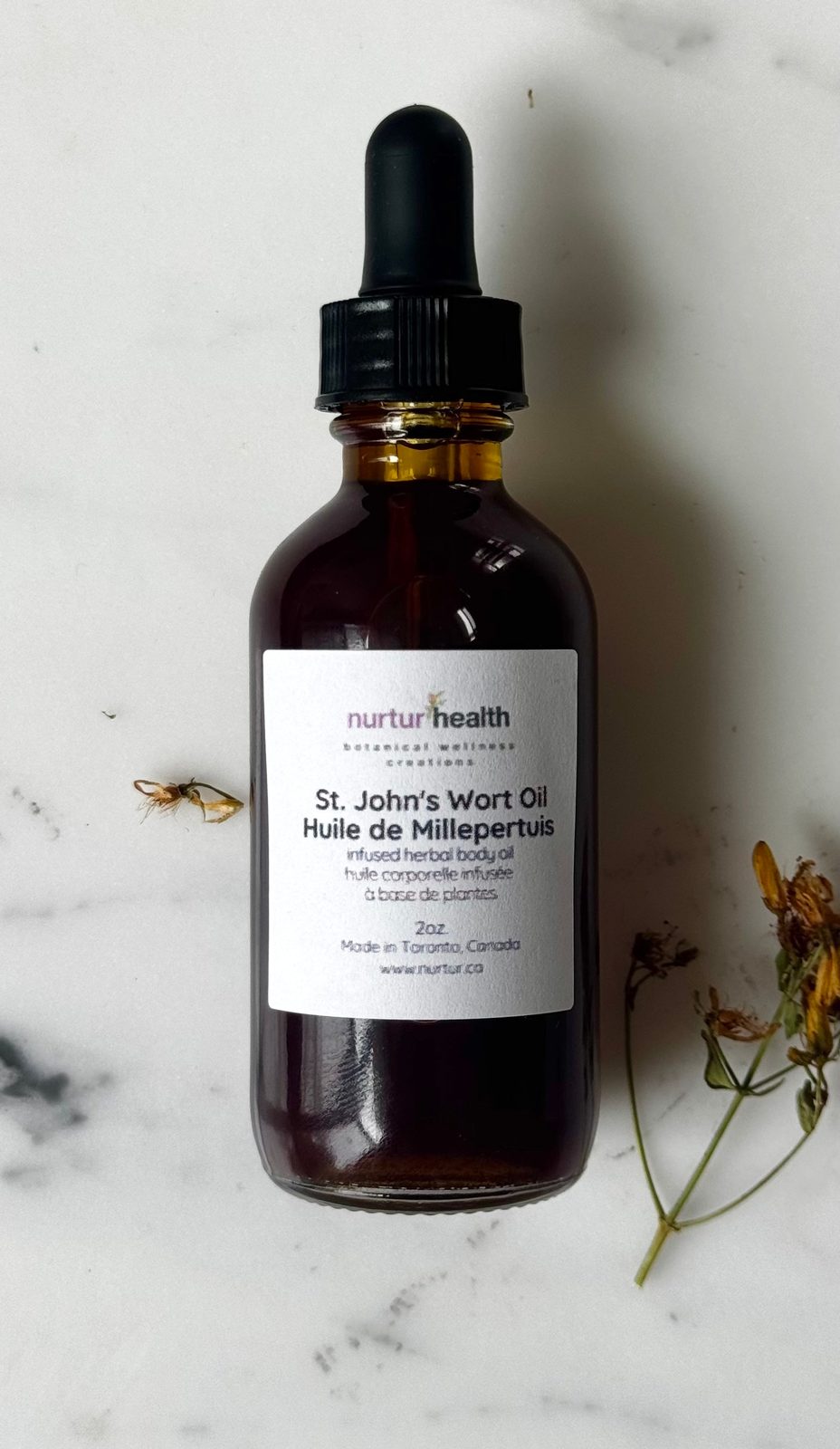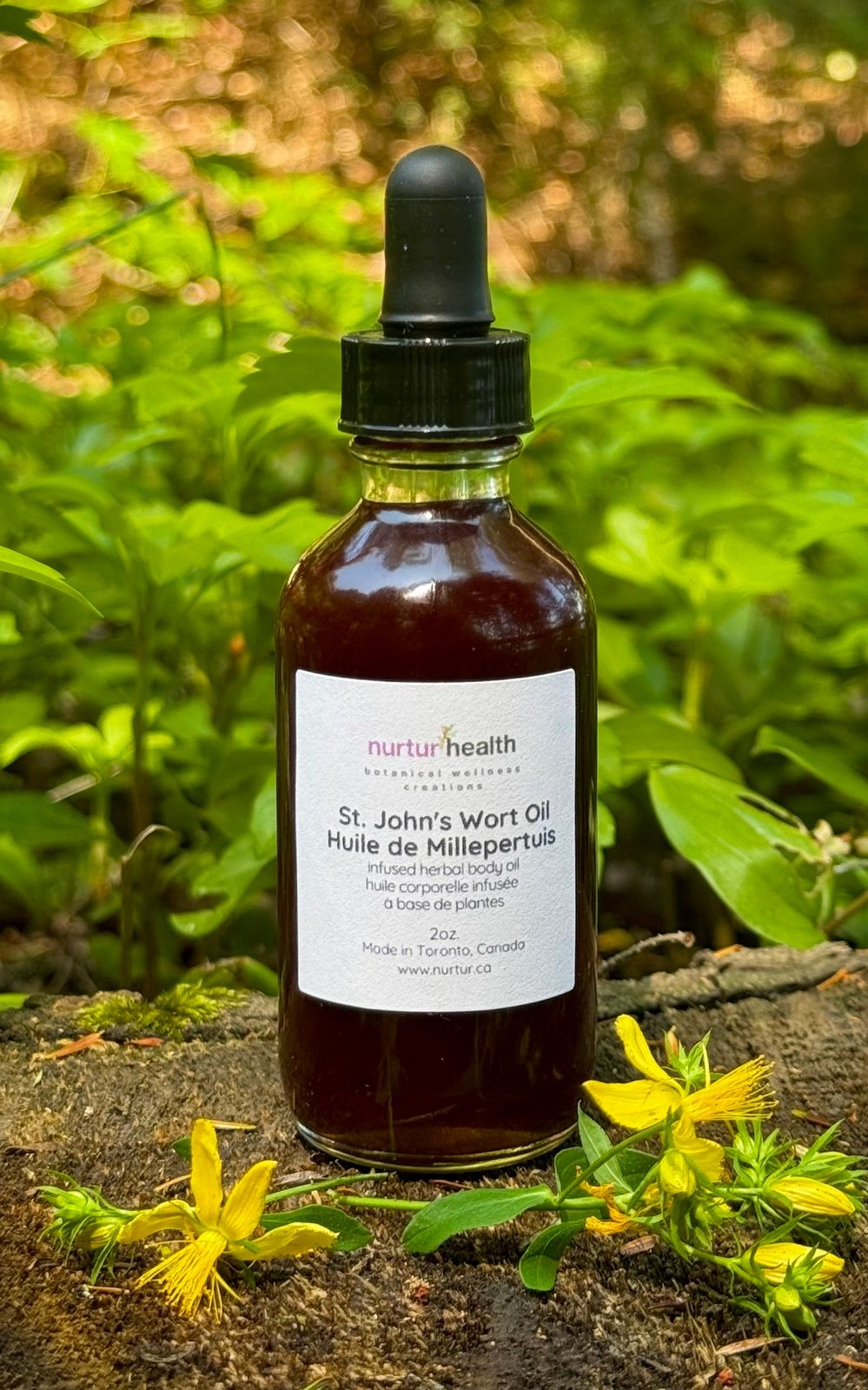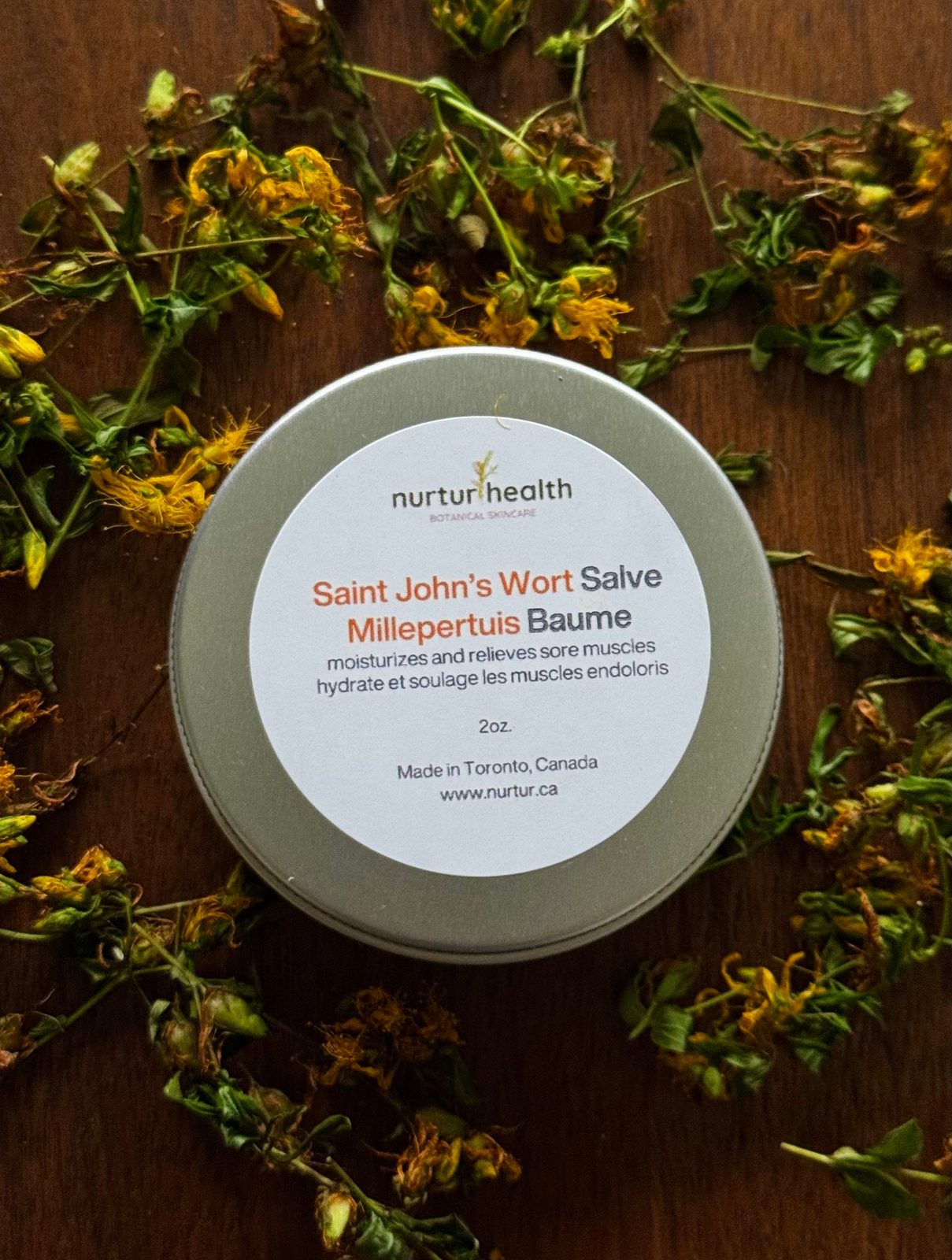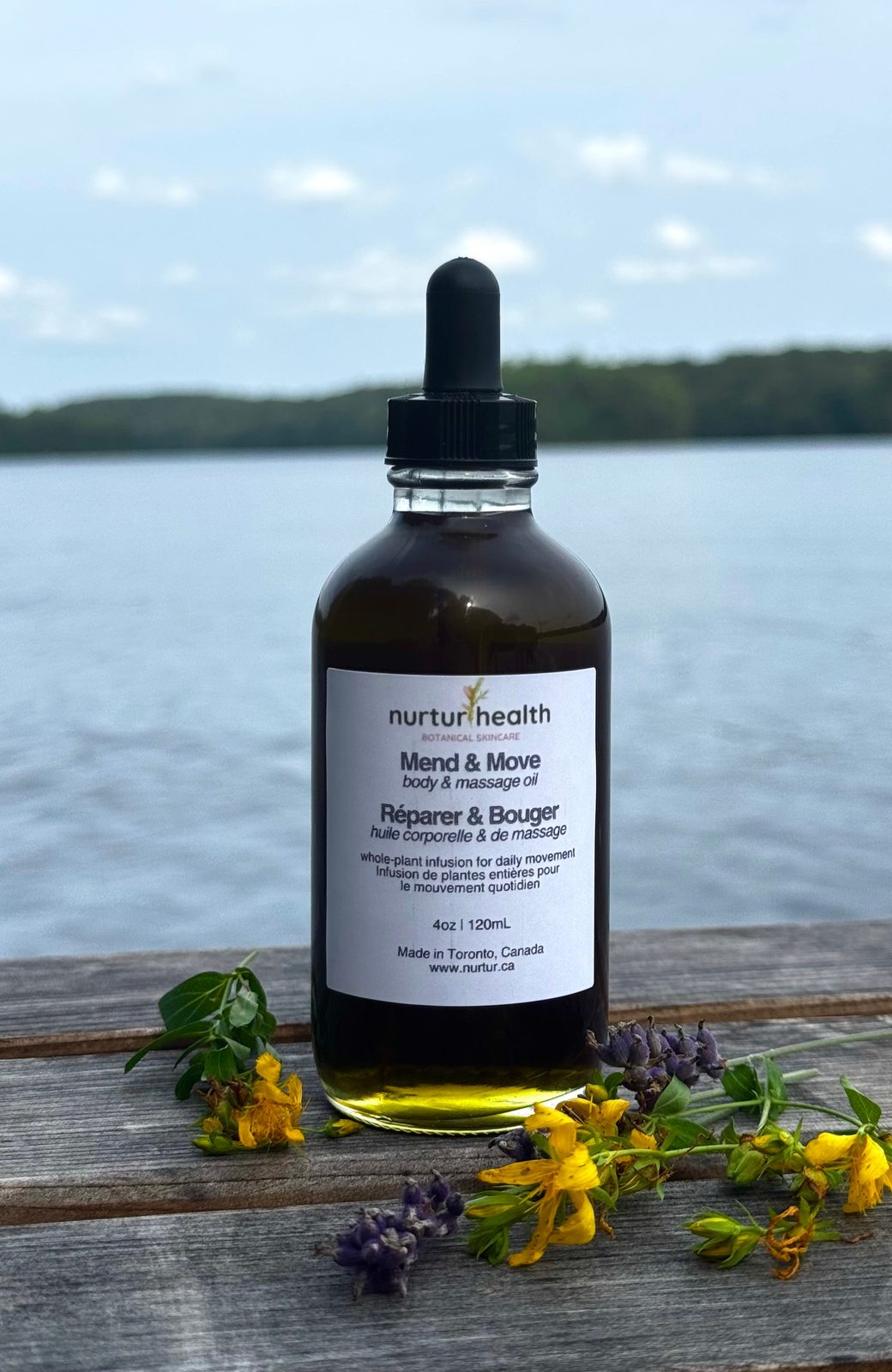
St John's Wort
Hypericum perforatum · HypericaceaeSt John's Wort takes its common name from its flowering season, traditionally gathered near St John's Day in late June, and its species name, perforatum, from the tiny translucent oil glands dotting its leaves — hold one up to the light and it looks pierced with pinholes. Those glands are full of hypericin, the pigment that turns a fresh infusion deep red. It is for unbroken skin only, and it is the one oil in the range that comes with a genuine sun-sensitivity caution.
How Nurtur Health infuses it
Flowering tops are wild-harvested by hand in the Muskoka region at the point in the season when the plant is at its strongest, then infused whole — not steam-distilled — in organic olive oil using the same alcohol-intermediary method as the rest of the range. The colour is entirely the plant: hypericin is fat-soluble, so it moves into the oil over the six-week maceration and turns it a deep, wine-red.
Traditional use
Topically, St John's Wort has a long folk history as a massage oil for overworked, sore and tense muscles, and for skin that has taken a knock — bruises, minor sprains, tension held in the shoulders and back. Because the whole flowering top infuses into the oil rather than being distilled into an essential oil, what results is a gentle, skin-ready extract rather than a concentrated one — the same distinction that separates every infused oil in this range from an essential oil.
St John's Wort compared